After the previous newsletter addressed key milestones in the work of Tourism Watch, this issue looks ahead: to the strategic fields of action that will be decisive for responsible and future-oriented tourism development. International arrivals have now surpassed pre-pandemic levels, and the sector anticipates further growth. This makes it even more important to embed sustainability not as a peripheral concern but as a binding guiding framework at the core of business models. Three core principles remain central: human rights and the self-determination of local communities must lie at the heart of tourism development; economic and social benefits must be distributed fairly; and tourism should constitute a positive and meaningful experience for both travellers and host communities.
The practical challenges arising from these principles become evident in our analysis of the Human Rights Impact Assessment in South Africa, in which Brot für die Welt – Tourism Watch has been involved. The article highlights the complexity of social risks within tourism supply chains and the implications these pose for human rights due diligence. A second field of action concerns climate justice. The feature on the social and environmental impacts of sustainable aviation fuels shows that technological solutions alone are insufficient to ensure a fair distribution of burdens regarding global climate change. It also becomes clear that structural transformations in tourism cannot be achieved without a critical examination of prevailing market logics. The article on overtourism and touristification points out why regulatory frameworks are essential to prevent urban and rural spaces from being shaped solely by global capital interests. Child protection likewise remains a central area of responsibility: the interview with ECPAT Germany outlines the challenges of preventing sexual violence against children –particularly in digital environments.
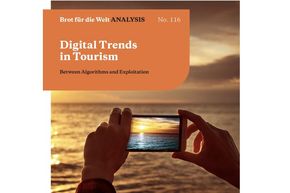
Another strategic dimension concerns digital transformation. Our recently published study Digital Trends in Tourism – Between Algorithms and Exploitation analyses the digital transformation with its opportunities and risks that arise for workers, local communities, travellers, and the use of natural resources. Finally, the article on the ASA volunteer programme highlights the potential of responsible international exchange for advancing sustainable development and how young people can act as multipliers.
We wish you an inspiring read and a peaceful end of the year.