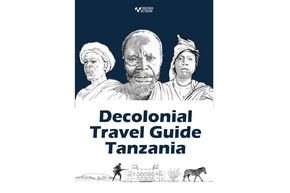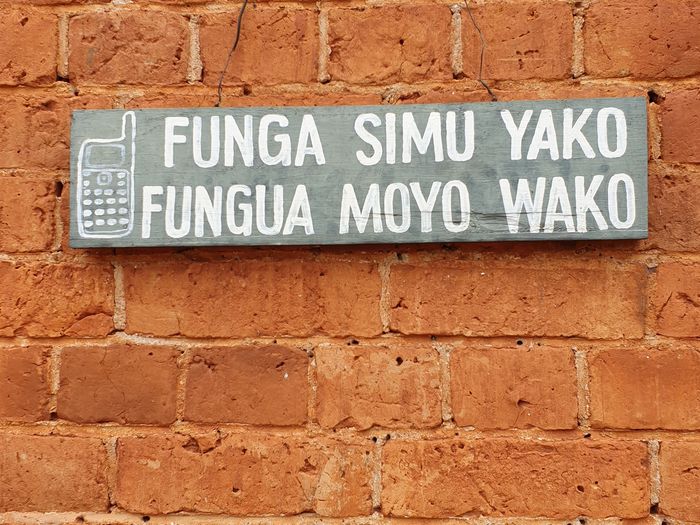
Tanzania is more than safaris, beaches and “exotic” landscapes. The “Decolonial Travel Guide Tanzania” invites readers to question familiar images and explore the country through different local perspectives. In this interview, Henriette Seydel and Bernard Ntahondi discuss the ideas behind their guide, the importance of multilingualism, and the question of who gets to tell tourism stories.
Interview by Alien Spiller
Ms Seydel, Mr Ntahondi, how did you come up with the idea of developing a decolonial travel guide for Tanzania?
Bernard Ntahondi: A large portion of existing travel literature relies on external perspectives and often reduces the country to familiar tropes – wildlife, beaches, and "exotic" landscapes – while overlooking its layered history and contemporary cultural life.
Henriette Seydel: Exactly. Through conversations with other German tourists and in the course of my research, I realised that knowledge about colonial history is often limited. Many travel guides and online platforms provide little information about museums and places that critically engage with this heritage. Yet there are numerous civil society, activist and academic initiatives in Tanzania that do exactly that and seek to use tourism as a space for learning. We therefore decided to bring these initiatives together. At the same time, we wanted to question tourism itself: Who benefits? Which images of Africa are being reproduced?
Bernard Ntahondi: The decolonial travel guide seeks to reposition Tanzanians as active narrators of their own spaces and to invite travelers to a more context-aware engagement with place. I believe its importance lies in shifting the framework through which Tanzania is understood - from a site of consumption to one of encounter, history, and lived experience.
The guide describes itself as a “travel companion offering a shift in perspective”. How did you approach the project in order to enable this change of perspective?
Bernard Ntahondi: The guidebook was not conceived as a prescriptive manual, but rather as an invitation to rethink one’s own perceptions. Rather than directing travelers on what to see, it encourages reflection on how places are seen and understood. By presenting locations within their historical, social, and political dimensions, it allows readers to engage with them beyond surface-level impressions.
Henriette Seydel: There is already a postcolonial travel guide to Namibia, which is well worth reading and which also inspired us. As a researcher, it was important to me to amplify African scholars and voices from the Global South. Being a white, European and academically privileged person, I did not want to carry out a project on decolonisation on my own. We therefore also invited non-academic contributors from both Germany and Tanzania to write texts for the guide, including tourists, tour guides, museum staff and activists. It was also important to us to achieve gender parity among the authors. We did not want to tell a single truth but rather create a shared space for learning.
Bernard Ntahondi: By incorporating the voices of local historians, artists, and cultural practitioners from all over Tanzania, this decolonial travel guide presents a plurality of perspectives instead of a single authoritative narrative, allowing local people like us to tell our own stories.
The guide is published in three languages – German, English and Swahili. Why was multilingualism such an important component of the project?
Bernard Ntahondi: Multilingualism was essential because language is closely tied to access and power. Including Swahili also challenges the dominance of foreign languages in the production and circulation of knowledge about Tanzania. It affirms that local audiences are not secondary, but central to the conversation.
Henriette Seydel: Funding the translations was actually not easy, as German funding schemes often do not cover such costs. However, we wanted the book to be usable for study trips, excursions and exchange programmes. Everyone should be able to access the information in their own language.
How does our understanding of Tanzania change when its history and tourism are told through local perspectives?
Bernard Ntahondi: Tanzania emerges then as more complex and dynamic! The focus shifts from static and often romanticized imagery to stories of continuity, change, and everyday life. Urban spaces such as Dar es Salaam, for instance, become key sites of cultural and historical engagement rather than peripheral stops. With our local perspectives we also introduce nuance or slight variations which helps in highlighting tensions, contradictions, and ongoing transformations. This approach moves beyond generalized representations and allows us Tanzanians who lives in Tanzania, to explain about Tanzania.
The travel guide has now been available for several months. How has it been received so far?
Henriette Seydel: The response has been very positive, which of course makes us very happy. The website is visited frequently by both Tanzanians and Germans, and the guide is regularly ordered. The book has now been published by weltweit as well as by Luviri Press Malawi, making it available in bookstores and online. We are also in discussions with Tanzanian publishers to make it available locally in print form. The feedback shows that the guide encourages reflection, provides a useful overview and makes the complexity of the topic visible. Reader feedback also highlights what is missing. And that is a good thing. The guide is not a finished product, but a tool to advance the discussion.
If readers were to change one aspect of their travel behaviour after reading the guide, what would you hope for?
Bernard Ntahondi: I would hope for a shift from passive consumption to active engagement. This might take the form of listening more attentively, seeking context, and being mindful of one’s position as a visitor. It could also involve making more intentional choices about how to interact with places and communities – not merely as an observer, but as a temporary participant: asking questions, embracing complexity, and being open to discomfort when familiar narratives are challenged. It also means recognizing that every place carries layered stories and that engaging with these stories requires humility, patience, and care.
Henriette Seydel: I hope for openness and curiosity. That travel is understood as part of a holistic learning experience that begins before departure and continues afterwards. That people remain open to new impressions, engage with the history of the country they are visiting, speak with people locally, and free themselves from stereotypical images and the pursuit of instagrammable photo hotspots.
Bernard Ntahondi: Ultimately, even small changes in awareness can foster more respectful, reciprocal, and meaningful encounters. A decolonial approach to travel is not about having all the right answers, but about cultivating a deeper attentiveness to context, power, and perspective. In the end, the most meaningful journeys are not measured by how much we see, but by how deeply we learn to see.
Bernard Ntahondi is a historian and works as a tour guide at the Dar es Salaam Centre for Architectural Heritage. He curates and presents films dealing with the impacts of the colonial period, organises seminars and workshops, and contributes as an expert to various educational events in Tanzania and Germany.
Henriette Seydel is a sociologist and conflict researcher. She is currently pursuing a PhD at the University of Augsburg on colonial heritage tourism in Tanzania. She serves as voluntary chairperson of the Tanzania Network e.V. and is responsible for the travel guide project.